

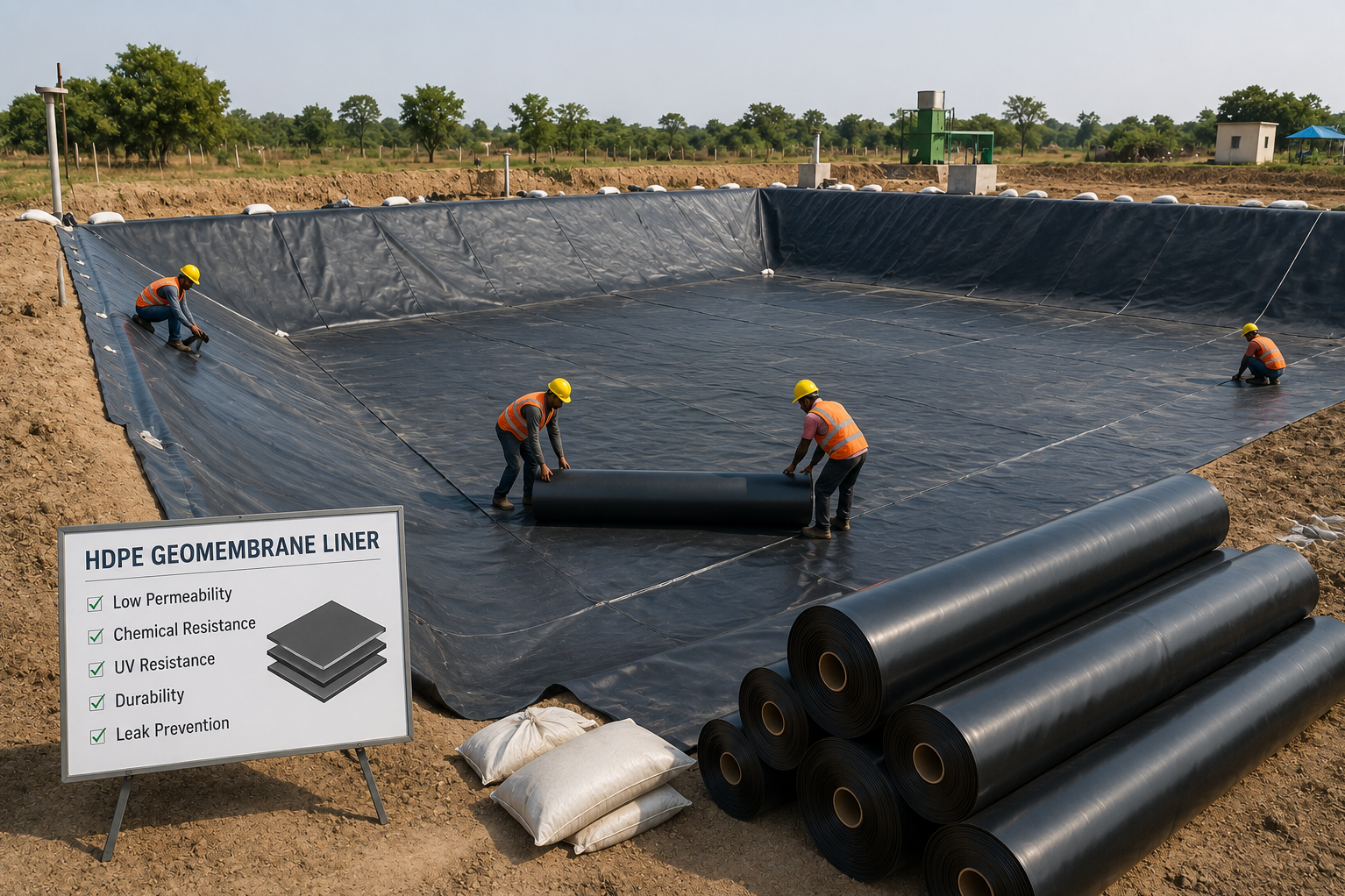
An HDPE geomembrane liner creates a low-permeability barrier that helps control the movement of water, wastewater, chemicals, and other liquids. It is commonly considered for ponds, reservoirs, landfills, industrial containment areas, sewage systems, and water-management projects.
Choosing a liner only by price can result in unsuitable thickness, poor installation, or early damage. The complete application should be evaluated before material selection.
Start with the Containment Requirement
A water-storage pond and an industrial effluent area have different performance needs. The type of liquid, operating temperature, expected pressure, exposure to sunlight, and condition of the ground all influence liner selection.
Thickness is another important factor. Greater thickness may provide better puncture resistance for demanding applications, but it can also affect handling and welding requirements. The project specification should determine the appropriate grade rather than assumptions made at the site.
Installation Conditions Matter
The supporting surface should be stable, smooth, and free from sharp stones or debris. Where the subgrade could damage the liner, a protective geotextile layer may be required.
Panel placement and seam welding must be completed carefully. Poorly formed seams can become leakage points even when the liner material itself is suitable. Weld inspections and appropriate testing help verify installation quality.
Nagpur’s high temperatures and seasonal rainfall should also be considered during planning. Thermal expansion, exposed edges, drainage, and anchoring arrangements require proper attention.
Civitech Services Pvt Ltd supports HDPE geomembrane liner requirements for environmental, agricultural, civil, and industrial projects in Nagpur. Share the site area, containment purpose, ground condition, and project specification to identify a suitable liner solution.