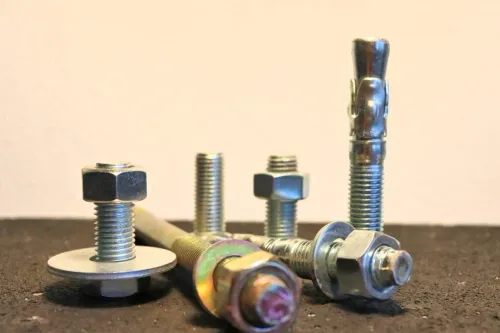


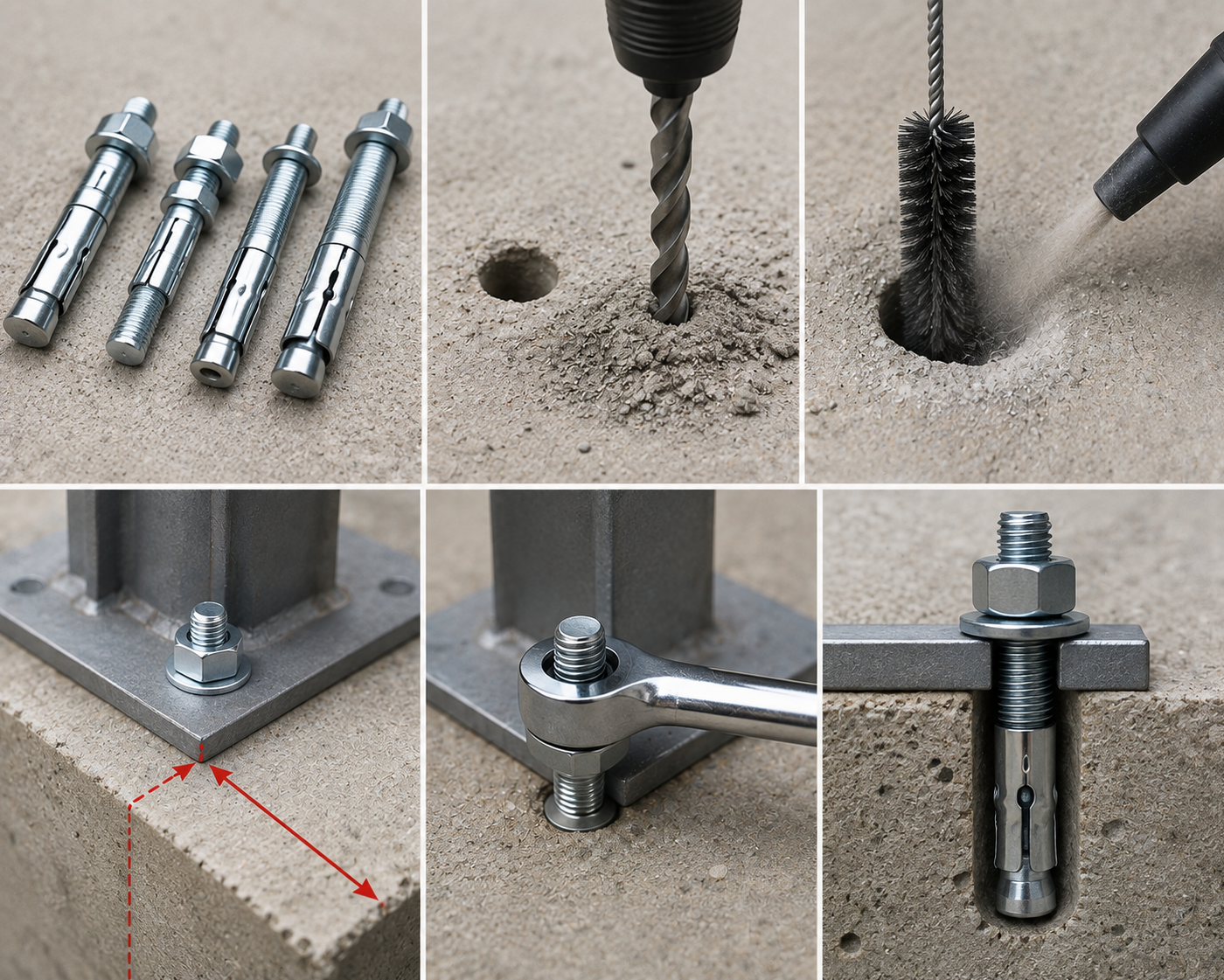
Anchor fasteners are used to attach structural frames, machinery, railings, shelves, service supports, and other components to concrete or masonry. Their performance depends on correct selection and installation, not merely on the size of the fastener.
Projects in Nagpur can avoid premature loosening and unsafe attachments by watching for these common mistakes.
1. Selecting an Anchor by Appearance
Two anchors of similar size may have different load capacities and approved applications. The base material, applied load, edge distance, and environmental conditions must guide selection.
2. Drilling the Wrong Hole Size
An oversized hole may prevent the anchor from gripping correctly. An undersized hole can damage the fastener during installation. The manufacturer’s specified drill diameter should always be followed.
3. Ignoring Drilling Dust
Dust and loose debris can interfere with mechanical expansion and chemical bonding. Holes should be cleaned using a suitable brush and air-cleaning method.
4. Installing Too Close to an Edge
Anchors placed near concrete edges can cause cracking or breakout under load. Required edge distances and spacing between fixings should be confirmed before drilling.
5. Overtightening the Fastener
Excessive torque can damage the anchor, crush the base material, or reduce holding capacity. A calibrated torque wrench may be required for critical installations.
Civitech Services Pvt Ltd supplies anchor fasteners for construction, engineering, and industrial requirements in Nagpur. Bring the application details, base material, and expected load when selecting a fixing system. The correct product and installation method can significantly improve connection reliability.