


Removing concrete does not always require aggressive demolition. In renovation, rehabilitation, structural modification, and service-installation projects, controlled cutting may be more appropriate when the objective is to create a defined opening or remove a specific section with greater precision.
A Diamond Concrete Cutter is commonly considered for such applications because diamond cutting technology can produce controlled cuts in concrete and reinforced concrete when suitable equipment and procedures are used.
For project teams in Nagpur, choosing between concrete cutting and conventional breaking should depend on the required outcome.
Concrete Cutting and Breaking Serve Different Purposes
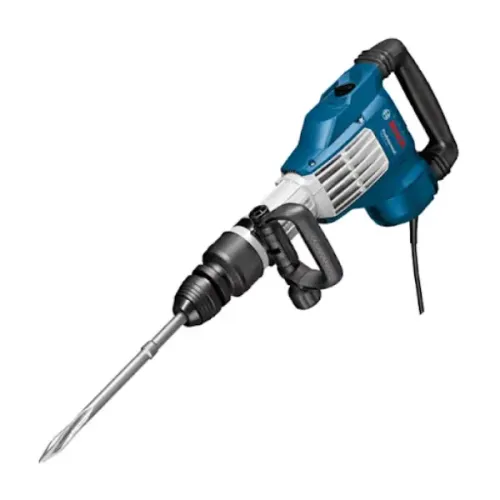
Conventional breaking is useful when material simply needs to be demolished and precision around the removal zone is less critical.
Diamond cutting is better suited to applications where the cut line, opening dimensions, surrounding structure, or finish requires more control.
Potential applications include:
- Door and window openings
- Floor openings
- Service penetrations
- Concrete slab modifications
- Controlled wall removal
- Expansion-joint work
- Infrastructure alterations
- Rehabilitation projects
Neither method should automatically replace the other.
Why Controlled Cutting May Be Preferred
One important advantage is precision. A planned cutting line allows the site team to define the removal zone before work starts.
It can also reduce the uncontrolled impact associated with repeated percussive breaking. This may be useful in existing buildings where adjacent finishes, occupied areas, or retained concrete need consideration.
Depending on the equipment and application, diamond cutting can also provide cleaner edges that require less secondary correction.
What Must Be Checked Before Cutting?
The concrete should never be treated as an empty mass.
Reinforcement, electrical services, plumbing lines, post-tensioning systems, and other embedded components may be present.
Before cutting, the responsible project team should review available drawings and determine whether scanning or other detection methods are necessary.
Structural approval is particularly important where an opening or removal could affect a load-bearing element.
Cutting Depth and Access Influence Equipment Choice
Concrete cutters are available in different configurations. The correct approach depends on the thickness of the concrete, required depth, orientation, reinforcement, working space, access, and required opening.
A tool suitable for a floor cut may not be the best choice for a deep structural wall opening.
Water management, slurry collection, electrical supply, operator access, and protection of nearby areas should also be planned.
Compare Total Project Impact
Contractors sometimes compare cutting and breaking only on equipment cost. A better comparison considers the complete job.
Evaluate:
- Required precision
- Time for secondary finishing
- Debris generation
- Vibration sensitivity
- Access restrictions
- Protection of retained areas
- Disposal requirements
- Overall work sequence
In occupied commercial or industrial properties, these factors can be as important as the direct cutting cost.
Civitech Services Pvt Ltd supports civil engineering and rehabilitation requirements in Nagpur involving concrete modification and related site work. When selecting a diamond concrete cutter or planning controlled concrete cutting, the objective should be to remove exactly what the project requires while managing the surrounding structure appropriately.
A clear cutting plan, suitable equipment, identification of concealed elements, and controlled execution can make concrete modification considerably more predictable than relying on unrestricted breaking.