

Joints are intentionally created in buildings to accommodate movement caused by temperature changes, settlement, vibration, and material expansion. If these joints are left untreated or filled with an unsuitable material, water can enter and damage surrounding concrete, finishes, and reinforcement.
What Should a Suitable Sealant Provide?
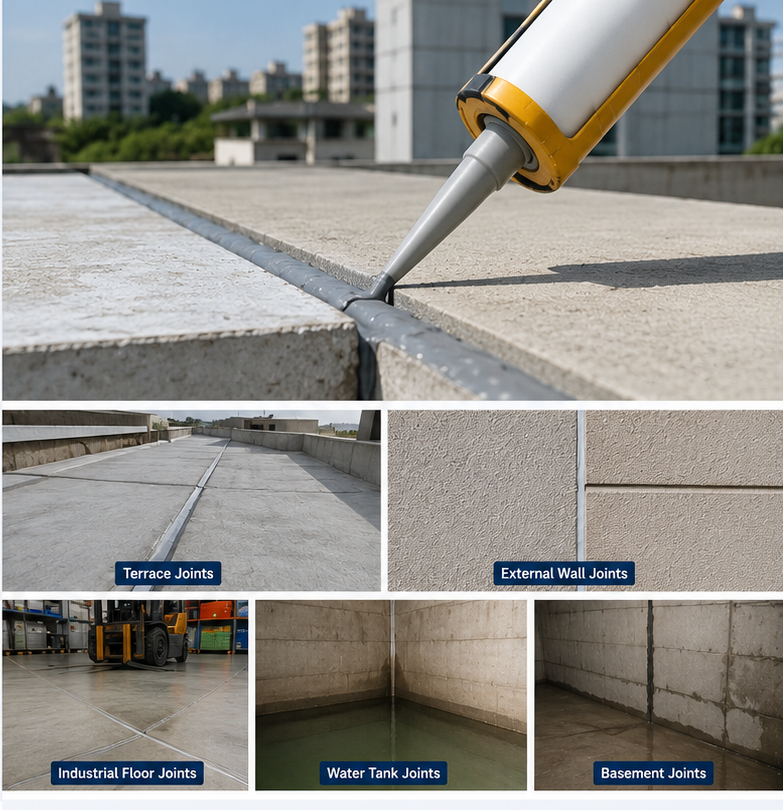
A joint sealant should remain bonded to both sides of the joint while allowing controlled movement. Selection depends on whether the joint is located on a terrace, external wall, industrial floor, basement, water tank, or façade.
Before finalising a system, check:
- Joint width and depth
- Expected movement
- Water and weather exposure
- Chemical or traffic conditions
- Compatibility with the substrate
Rigid materials should not be used where regular movement is expected. They may crack or separate from the joint edges. Flexible sealants are available in different formulations, making application-specific selection important.
Signs That Professional Treatment Is Needed
Repeated leakage along a straight line, cracked joint filler, detached sealant, dampness near construction joints, and water entry during monsoon are common warning signs. Applying another layer over failed material rarely provides a lasting solution. The old sealant should be removed, the joint cleaned, and the new system installed at the correct depth.
Civitech Services Pvt Ltd provides joint sealants and waterproofing solutions for buildings and industrial facilities in Nagpur. Schedule an inspection to assess the joint condition and identify a compatible treatment before leakage affects adjoining surfaces.